Choose the alloy, molding route, finishing and inspection evidence from one controlled drawing before tooling.

STAINLESS STEEL SAND CASTING FOR OEM PARTS
HULK Metal Stainless Steel Sand Casting Foundry
-
Introduction
-
Alloy Route
-
Production Line
-
Quality Evidence
-
Release Gates
-
Part Families
-
Benefits
-
Articles
-
Top
STAINLESS STEEL SAND CASTING FOUNDRY FOR DRAWING-LED OEM PARTS
STAINLESS SAND-CASTING ROUTE
Choose a stainless steel sand foundry by freezing the alloy, casting route, cleanliness requirement and acceptance record before tooling. HULK Metal coordinates drawing review, casting, machining, finishing, inspection and shipment around one approved revision.
One grade name is not a release basis.
Confirm the standard, process condition, test basis and finished surface together.
Start with route fitCompare size, geometry, tooling and surface demand.
Freeze the alloyDefine the cast grade, standard and test basis.
Agree the release proofSet cleaning, passivation and inspection records early.

FREEZE THE STAINLESS GRADE AND ROUTE BEFORE THE FIRST MOLD
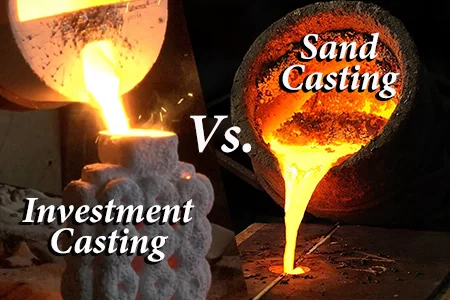
The first useful question is not “can this part be sand cast?” It is which route can hold the stainless grade, the working surfaces and the acceptance plan at the stated quantity. Sand casting often deserves review when the part is larger, the tooling budget favors a reusable mold, or machining can establish the critical interfaces. Investment casting can be stronger for fine detail, thin sections or small complex features. The answer changes with the drawing.
01
Stainless sand casting
Use it when moldability, size, batch economics and machining access fit the geometry. Draft, parting, cores, feed and shrink allowance must be reviewed before the pattern is released.
02
Stainless investment casting
Choose it when fine detail, thinner sections or a compact complex shape matter more than mold size and per-piece route economics. Wax release and shell support still control feasibility.
03
Fabrication or hybrid work
A large hollow body, low-volume shell or assembly may be better formed from plate and then finished. Keep that option visible instead of forcing every stainless shape into one casting route.
| Decision | Stainless sand casting | Stainless investment casting | What the drawing must show |
|---|---|---|---|
| Part scale | Generally stronger candidate for larger bodies and molds | Usually selected for smaller, detail-led parts | Bounding envelope, mass, minimum section and handling points |
| Geometry | Draft, parting, core access and machining access are decisive | Fine features can be captured, subject to wax and shell feasibility | Critical features, undercuts, cored passages and datum scheme |
| Surface and detail | As-cast surface plus agreed machining or finishing | Often chosen when as-cast detail and finish demand are higher | Surface condition, Ra target if required, polish or passivation route |
| Tooling and batch | Reusable pattern route can suit repeat or larger production | Pattern and shell preparation carry their own economic basis | Trial quantity, annual quantity, tooling ownership and change rule |
| Inspection | Visual, dimensional and material checks are selected by risk | Same release discipline; the route alone does not set the test package | Critical dimensions, soundness, pressure, corrosion and report scope |
Route rule: decide sand versus investment before tooling, not after a supplier has priced only one route. A second quotation is not comparable when it changes grade basis, machining scope, finish or inspection.
Freeze a cast-equivalent grade
Published HULK Metal material information identifies 304/304L and 316/316L as common stainless starting points. For sand castings, CF8 and CF8M are common cast-equivalent families, but the governing standard, heat-treatment condition, chemistry limits and mechanical acceptance still need to be written on the approved documents. “304” or “316” alone is too loose for production release.
- 304-type / CF8
- General-corrosion starting pointAsk whether the service environment is compatible with the molybdenum-free family, then freeze the standard, chemistry, mechanical basis and any specified corrosion test.
- 304L-type / low-carbon
- Welded or heavy-section reviewConfirm whether the governing product standard requires the low-carbon designation, and record the welding or heat-treatment assumption.
- 316-type / CF8M
- Higher pitting-resistance intentDocument the chloride, temperature and cleaning condition; freeze molybdenum-bearing chemistry, mechanical basis and any agreed corrosion check.
- 316L-type / low-carbon
- Heavy-section corrosion dutyMake the chemistry, delivery or heat condition, passivation route and inspection record explicit.
Customer-grade check: the grade may be acknowledged, but the production basis is not frozen until the cast equivalent, governing standard, sampling rule and required reports are checked against the drawing and process. An unfamiliar high-alloy grade needs a feasibility review before any tooling commitment.
Does 316 automatically suit every wet or marine application?
No. Chloride level, temperature, crevice geometry, cleaning practice and required service life all affect the choice. The page should not convert a broad grade reputation into a project guarantee.
-
01Automated molding line
Supports repeatable mold handling when the selected part and batch fit the line.
![Automated molding line]()
-
02Manual molding workshop
Provides a flexible route for low-volume, large or geometry-sensitive molds.
![Manual molding workshop]()
-
03Stainless steel melting
Charge identity, chemistry and release condition are controlled before pouring.
![Stainless steel melting]()
-
04Pouring and controlled cooling
Fill, temperature and cooling practice are managed against the approved casting plan.
![Pouring and controlled cooling]()
-
05Shot-blasting cleanup
Removes sand and scale and prepares a readable surface for inspection and finishing.
![Shot-blasting cleanup]()
-
06Cleaning and surface treatment
The finishing and passivation route is selected from the grade and service requirement.
![Cleaning and surface treatment]()


QUALITY CONTROL BUILT AROUND STAINLESS-SPECIFIC FAILURE MODES
A stainless sand casting can carry every process condition on paper and still fail at release. The common causes are rarely a mystery: carbon pickup from contaminated tooling or additives, chromium depletion from poor thermal or cleaning practice, sand inclusion, gas porosity, shrinkage, hot tearing, distortion, or a finish that looks clean while trapping contamination. The control plan has to name which of these can affect the part.
Carbon pickup
Mold, core, coating, tooling and handling must be compatible with the intended stainless grade. Test the actual melt and final condition rather than relying on a clean workshop impression.
Chromium depletion
Heat, oxidation and finishing choices can leave the surface less corrosion-resistant than the core chemistry suggests. Specify passivation where required and inspect the released condition.
Sand and gas defects
Binder, coating, venting, moisture and pouring control influence inclusion and porosity. Critical faces need a readable acceptance rule rather than a generic cosmetic standard.
Distortion and tearing
Section transitions, restraint, gating and cooling can create hot tears or movement. First-article measurement should occur before machining hides the casting condition.
Build the inspection plan around the failure mode
The published HULK Metal QC inventory includes spectrometry, CMM, hardness, tensile, metallographic and corrosion-testing capability. That is a capability list, not a default inspection package. For each project, decide which evidence answers a real risk and at what frequency.
| Evidence question | Possible method | Use it when | Do not infer |
|---|---|---|---|
| Is the melt the frozen grade? | Optical emission spectroscopy against the approved limits | Every production heat or the agreed sampling basis | That one finished surface photo proves composition |
| Did the casting meet the required dimensions? | CMM or layout inspection against the released drawing and datums | Critical interfaces, first article and agreed production sampling | That unmeasured features will repeat |
| Is the required strength condition present? | Tensile and hardness testing on the specified basis | The governing standard or drawing calls for mechanical evidence | That hardness alone proves every mechanical property |
| Is internal soundness acceptable? | Visual, sectioning, pressure, RT or UT as specified | Pressure duty, critical sections or a defined internal-quality requirement | That an as-cast photo reveals internal porosity |
| Is corrosion resistance released? | Agreed chemical, metallographic or corrosion test plus finish condition | The service environment or standard requires more than grade identity | That 316-type chemistry guarantees project performance |
| Was cleaning and passivation controlled? | Process record, residue check and approved visual reference | Food, wet, hygienic or corrosion-sensitive surfaces are specified | That a bright appearance proves passivation |
Can HULK Metal provide material and inspection reports?
Documentation is scoped to the order. Name the required report, test method and acceptance standard during quotation, because the equipment list alone does not define which records will be delivered.
Is passivation always required?
Not by default. The need and method depend on the grade, service environment, cleaning route, fabrication state and customer standard. When it is required, make the acceptance condition explicit.
ISO 9001 is published as the site quality-management basis. It supports control discipline, but it is not a substitute for a grade certificate, dimensional report, pressure test or customer-specific approval.
-
![Optical emission spectrometer]() Optical emission spectrometer
Checks melt chemistry against the frozen stainless grade.
-
![Coordinate measuring machine]() Coordinate measuring machine
Checks three-dimensional geometry against the approved drawing or model.
-
![Tensile testing]() Tensile testing
Supports mechanical evidence where the standard or drawing requires it.
-
![Hardness testing]() Hardness testing
Verifies the agreed hardness basis after casting or heat treatment.


FIVE RELEASE GATES FROM DRAWING TO STAINLESS CASTING BATCH
Five release gates keep the stainless decision from drifting between sales, tooling, production and shipment. Each gate should stop the job when its evidence is missing. The labels below are buying decisions, not decorative milestones.
Gate 1
Drawing
Drawing
Freeze the revision. Record the 2D drawing or approved sample, 3D model if available, material standard, critical dimensions, machining stock and surface requirement. A newer model sent by chat does not replace a controlled drawing.
Gate 2
Grade
Grade
Freeze the cast grade. Match the stainless intent to the cast-equivalent specification, standard and delivery condition. Confirm whether chemistry, mechanical, corrosion or certification evidence is required.
Gate 3
Mold
Mold
Approve the process plan. Parting, draft, cores, gating, feed, cooling, shrinkage, distortion and machining allowance belong in one tooling and first-article review.
Gate 4
Sample
Sample
Release from evidence. The first article should match the frozen revision and show the agreed chemistry, dimensions, surface condition and any specified NDT, pressure or corrosion result. A photograph is not a dimensional record.
Gate 5
Shipment
Shipment
Close quantity and condition. Compare final quantity, labels, protection, documents and the released finish or passivation condition. A late report does not protect receiving inspection.
- DrawingReleased drawing, model status and RFQ scope prevent a quote or pattern from following different geometry.
- GradeGrade standard, chemistry and test basis replace shorthand family names with a controlled material condition.
- MoldParting, core, feed, allowance and inspection-access review move casting risk into the design stage.
- First articleDimensional, material, visual and optional NDT or pressure records connect appearance to measurable acceptance.
- ShipmentFinal inspection, finish, packing and the document set keep release evidence attached to the actual batch.
Stop condition: hold tooling release while a critical surface, pressure boundary, machining datum or corrosion requirement has no measurable acceptance method. A verbal assurance cannot be reconciled later against a different drawing revision.
-
 PART 01Mold and core preparation
The mold follows the approved parting, core, gating and allowance plan.
-
PART 02Melt preparation and pouring
Material identity and pouring conditions are controlled before solidification.
-
PART 03Heat treatment
The thermal route is specified from the grade, section and required delivery condition.


-
PART 04Finishing and release preparation
Gate removal, cleaning and final preparation bring the casting to inspection condition.

STAINLESS SAND-CASTING PART FAMILIES WE CAN REVIEW FROM A DRAWING
The part family helps narrow the route, but it does not set the quotation by itself. Two similar housings can differ in section transitions, pressure duty, machining access and batch size. Use this matrix to prepare the right questions before sending the drawing.
| Part family | Why stainless sand casting may fit | Decision focus | Evidence to discuss |
|---|---|---|---|
| Pump and valve components | Casting can create flow passages and flanges that would require heavy fabrication | Pressure boundary, passage core, flange flatness, datum and machining stock | Grade, pressure or leak test, dimensional report and specified NDT |
| Food-processing machinery parts | Complex housings, frames, guards or contact-adjacent parts may need a reusable mold route | Cleanability, product-contact scope, surface route and assembly interfaces | Alloy condition, finish, passivation, residue control and visual reference |
| Water and wastewater hardware | Size and replacement volume can favor sand molding economics | Corrosion exposure, connection geometry, coating or passivation and fit | Grade, dimensional basis, leakage test if specified and marking |
| Industrial machinery housings | Large bodies and stable mounting features can be integrated into the casting | Distortion, section transitions, machined faces and lifting points | First-article CMM, hardness or mechanical basis and repair rule |
| Custom replacement parts | An existing sample may provide a practical starting point when drawings are incomplete | Recovered critical dimensions, wear allowance, fit and material identity | Sample measurement, reverse-drawing approval and defined acceptance |
What should be sent with the drawing?
Send the released drawing or physical sample, 3D model if available, stainless grade and standard, annual and first-order quantity, critical dimensions, machining allowance, heat-treatment condition, surface and passivation requirement, inspection scope, marking and packing. Add the service environment when it affects the grade or corrosion-test decision.
Envelope rule: this page does not publish a universal stainless part-weight or section limit. The available line, molding method, core plan and release inspection are confirmed for the reviewed geometry and quantity.

More Results
WHY KEEP THE STAINLESS CASTING ROUTE WITH HULK METAL
One project baseline
Casting, machining, heat treatment, surface finishing, inspection, packing and freight planning can be coordinated around one approved drawing revision.
Evidence follows the batch
Chemistry, dimensional, mechanical and process records can be assembled into the document set agreed for the order rather than added after release.
Tooling judged by its job
Pattern material, molding route, core design and expected volume are compared together. Tooling cost is not separated from repeatability and maintenance.
Recovery tied to evidence
Confirmed quality discrepancies or shortages are reviewed against the order basis before a corrective action such as rework, replacement, replenishment, return or exchange.
Send the drawing, grade standard, quantity, machining scope, finish or passivation requirement, inspection package and destination.
HULK Metal can then review the stainless sand-casting route, tooling scope and release evidence against one commercial baseline.
-
Integrated coordination
One project route from casting through finishing, inspection and packing.
-
Traceable quality
Batch-related chemistry and inspection records are agreed at quotation.
-
Process-fit tooling
Pattern, molding and core choices are matched to geometry and expected volume.
-
Evidence-led recovery
Confirmed nonconformities are reviewed against the approved order basis.
-
![Sand Casting Mold Design: Draft, Allowance and Gating in Practice]()
November 12, 2026
Sand Casting Mold Design: Draft, Allowance and Gating in Practice
READ MORE
-
![Casting Defects: A Photo-Led Guide to Misruns, Cold Shuts and Sand Defects]()
October 24, 2026
Casting Defects: A Photo-Led Guide to Misruns, Cold Shuts and Sand Defects
READ MORE
-
![Casting Tolerances by Process: ISO 8062 Grades vs What Foundries Actually Hold]()
October 15, 2026
Casting Tolerances by Process: ISO 8062 Grades vs What Foundries Actually Hold
READ MORE
-
![Investment Casting vs. Sand Casting: Which Process Suits Your Project Best?]()
May 07, 2025
Investment Casting vs. Sand Casting: Which Process Suits Your Project Best?
READ MORE